


The Evolution of Football: From Ancient Roots to Modern Codes


For millennia, humans have felt an innate urge to kick round objects. The earliest recorded evidence of organised kicking games traces back over 2 000 years to China, where Han Dynasty soldiers practiced Tsu’ Chu, a military exercise requiring players to control a leather ball without using their hands.
Other early variations included Japan’s cooperative Kemari, Greek Episkyros, and Roman Harpastum.
By the 14th century, chaotic “folk football” matches erupted across Europe. These violent contests involved entire villages fighting to transport a ball to an opposing landmark. The game was so unruly that English monarchs repeatedly banned it, while Renaissance Italy refined it into calcio for young aristocrats.
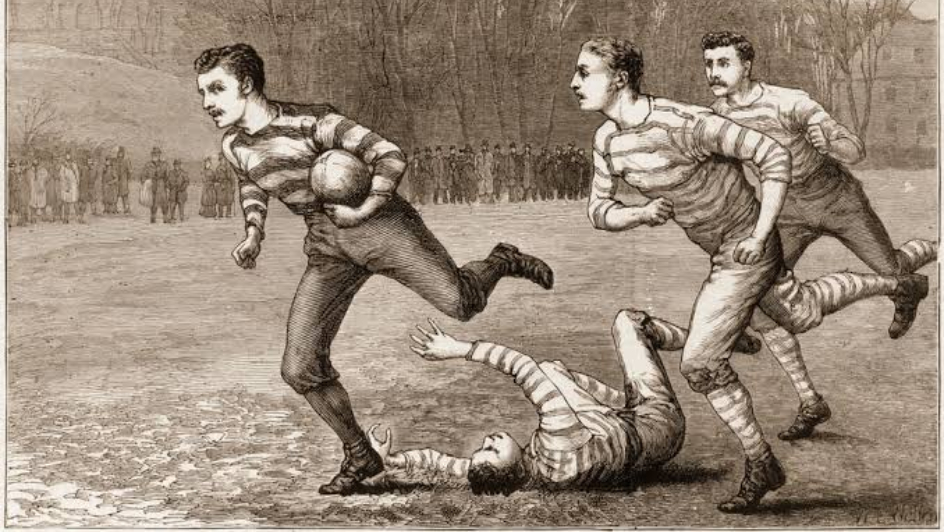
The modern game was shaped in elite English public schoolyards during the 18th and 19th centuries. Sir Thomas Elyot famously condemned the sport’s “beastely fury, and extreme violence.” To resolve conflicting school rules, university students codified standardized games.
The formation of England’s Football Association in 1863 outlawed hand usage, permanently splitting association football (also known as soccer) from rugby. Rapid industrialisation transformed the sport into a global working-class phenomenon, leading to professional leagues, international confederations, and major worldwide competitions like the FIFA World Cup.
Image Credit: Source