

Robots Perform World’s First Remote Surgeries on Pigs


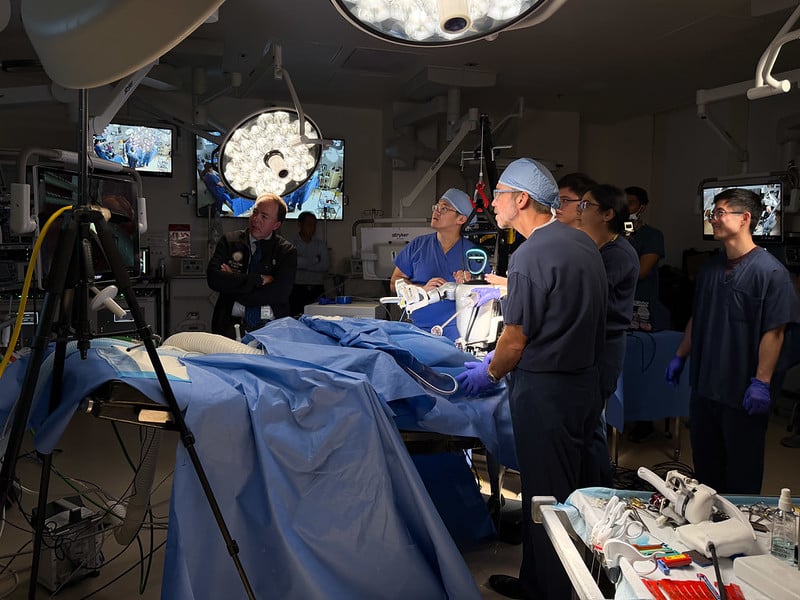
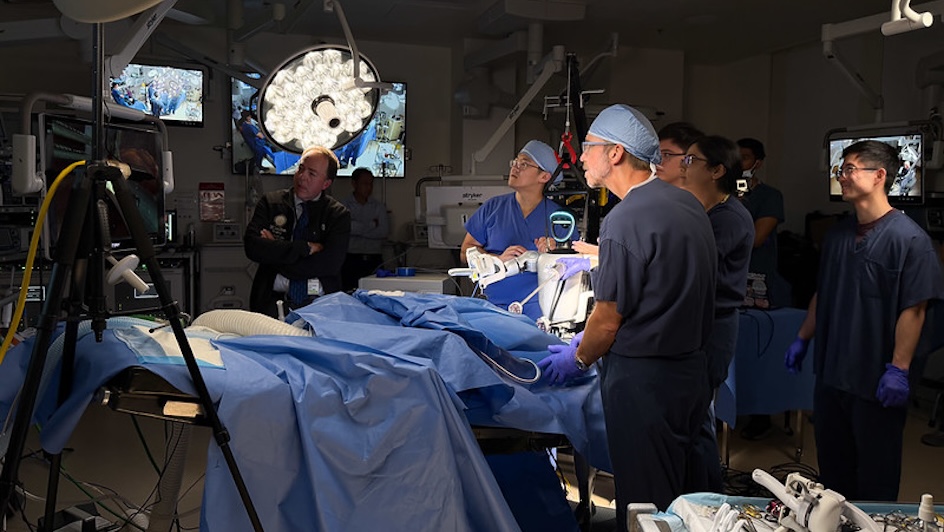
A team of engineers and surgeons from the University of California, San Diego (UCSD) has successfully used remote-operated humanoid robots to perform laparoscopic gallbladder removals on live pigs.
In one groundbreaking procedure, a human surgeon worked alongside a humanoid assistant; in another, two teleoperated robots completed the surgery together. Dubbed “Surgie,” the systems were created by modifying the commercially available Unitree G1 humanoid platform with custom tool adapters, hand-control software and stereo headset displays.
Standing at 1.52 metres tall and weighing roughly 27 kilograms, these humanoid robots present a major contrast to traditional, multi-million-dollar surgical systems like the da Vinci, which weigh up to 816 kilograms. Surgie offers a compact, lightweight and significantly cheaper alternative that is far easier to transport.
“It’s a fraction of the cost and takes a fraction of the space in an operating room,” said UCSD surgeon and study co-author Shanglei Liu. “So it’s easy to deploy, anywhere from rural areas to the battlefield, and even to space.”
While the trials demonstrated impressive precision, the team noted current limitations, including signal latency, limited arm reach and the need for frequent recalibrations, which slowed procedure times.
Nevertheless, researchers are optimistic about rapid advancements. Beyond performing operations remotely, future iterations could function as autonomous assistants, fetching instruments, cleaning operating rooms and mitigating staff shortages in under-resourced medical facilities worldwide.
Image Credit: Source