

The Human Premium: Skills That AI Cannot Replicate


The initial “shock and awe” of generative artificial intelligence has transitioned into a permanent fixture of our professional lives. While AI has mastered the art of processing data, generating code, and synthesizing vast amounts of information, a distinct boundary has emerged. This boundary defines the “Human Premium”: a suite of high-level cognitive and emotional skills that remain fundamentally beyond the reach of silicon and algorithms.
To stay competitive in an automated economy, the focus is shifting from competing with machines to doubling down on what makes us uniquely human.
- Complex Empathy and Nuanced Communication
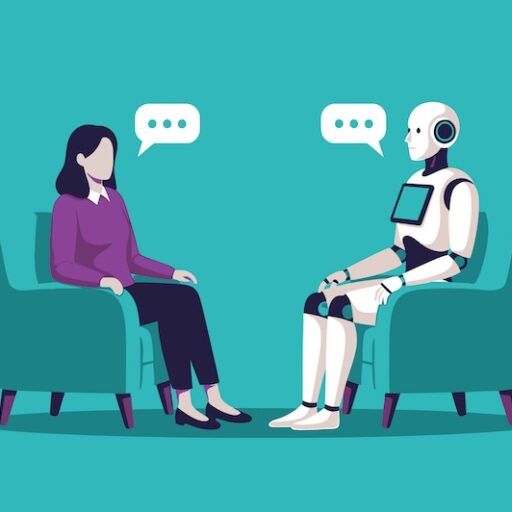
AI can simulate empathy through “sentiment analysis,” but it cannot feel or truly understand the weight of a human experience. In high-stakes environments, such as healthcare, crisis management, or deep-level sales, the ability to read “between the lines” of a conversation is vital.
The Human Premium lies in contextual EQ: the ability to sense a client’s unspoken hesitation, offer genuine comfort to a grieving patient, or navigate the cultural sensitivities of a global boardroom. These are not just “soft skills”; they are the bedrock of trust, which remains the ultimate currency in business.
- Radical Creativity and “The Leap”
AI is inherently derivative; it creates by looking backward at existing data to predict the next logical step. It is excellent at “remixing” but struggles with originality.
Human creativity involves “the leap”: the ability to connect two completely unrelated fields to create something entirely new. Whether it’s a chef fusion-cooking with ingredients that “shouldn’t” work or a physicist using a metaphor from poetry to solve a mathematical bottleneck, humans possess the erratic, non-linear spark that drives true innovation.
- Ethical Moral Agency and Responsibility
An algorithm can suggest a medical diagnosis or a legal strategy based on probability, but it cannot take responsibility for the outcome. The “Human-in-the-Loop” (HITL) model is the gold standard because machines lack moral agency.
Deciding the “lesser of two evils” in a corporate crisis or making an ethical call that prioritizes human life over profit requires a conscience. We cannot hold a piece of software accountable in a court of law or a public forum; therefore, the person who signs off on the AI’s suggestion provides a premium value that no machine can replace.
- Physical Dexterity in Unstructured Environments
While we often focus on “white-collar” AI, there is a massive human premium in the physical world. Moravec’s Paradox states that high-level reasoning requires very little computation, but low-level sensorimotor skills require enormous computational resources.
A robot may be able to move a box in a controlled warehouse, but a human plumber navigating a 100-year-old basement or a surgeon adjusting for a sudden change in a patient’s anatomy possesses unstructured dexterity. Until robotics catches up to the fluid mechanics of the human hand and brain, trade crafts and specialized physical labor remain highly resilient.
- Strategic Vision and Intent
AI is a “tool of execution.” It needs a prompt, a goal, and a boundary. It does not have intent. It doesn’t “want” to win a market, it doesn’t “care” about a brand’s legacy, and it cannot form a long-term vision for a community.
Humans provide the Why. We define the purpose of the work, set the trajectory for the next decade, and pivot when our intuition tells us the data is leading us astray.